For most of their history, manufacturers sold through distributors and dealers and left the buying experience to someone else. Buyers now expect to research, configure, and often purchase directly from the source. Manufacturers who can’t support that are giving the customer relationship, and the data that comes with it, to someone else in the chain.
A manufacturer’s eCommerce project looks very different from a retailer’s. Your products are more technical, your buyers are more varied, and you probably need to support a distributor network alongside any direct sales. This guide covers what eCommerce means for a manufacturer, the benefits worth planning for, the platform features that matter most, and a realistic path to launch.
The short version
eCommerce lets manufacturers sell to distributor and dealer accounts, to end customers, or to both through an online storefront. The platforms that fit handle technical catalogs, account-specific pricing, ERP integration, and a distributor network that still matters. Start with your product content, choose your model, plan integrations early, and launch in phases.
What Is eCommerce for Manufacturers? (And How It Differs from Retail)
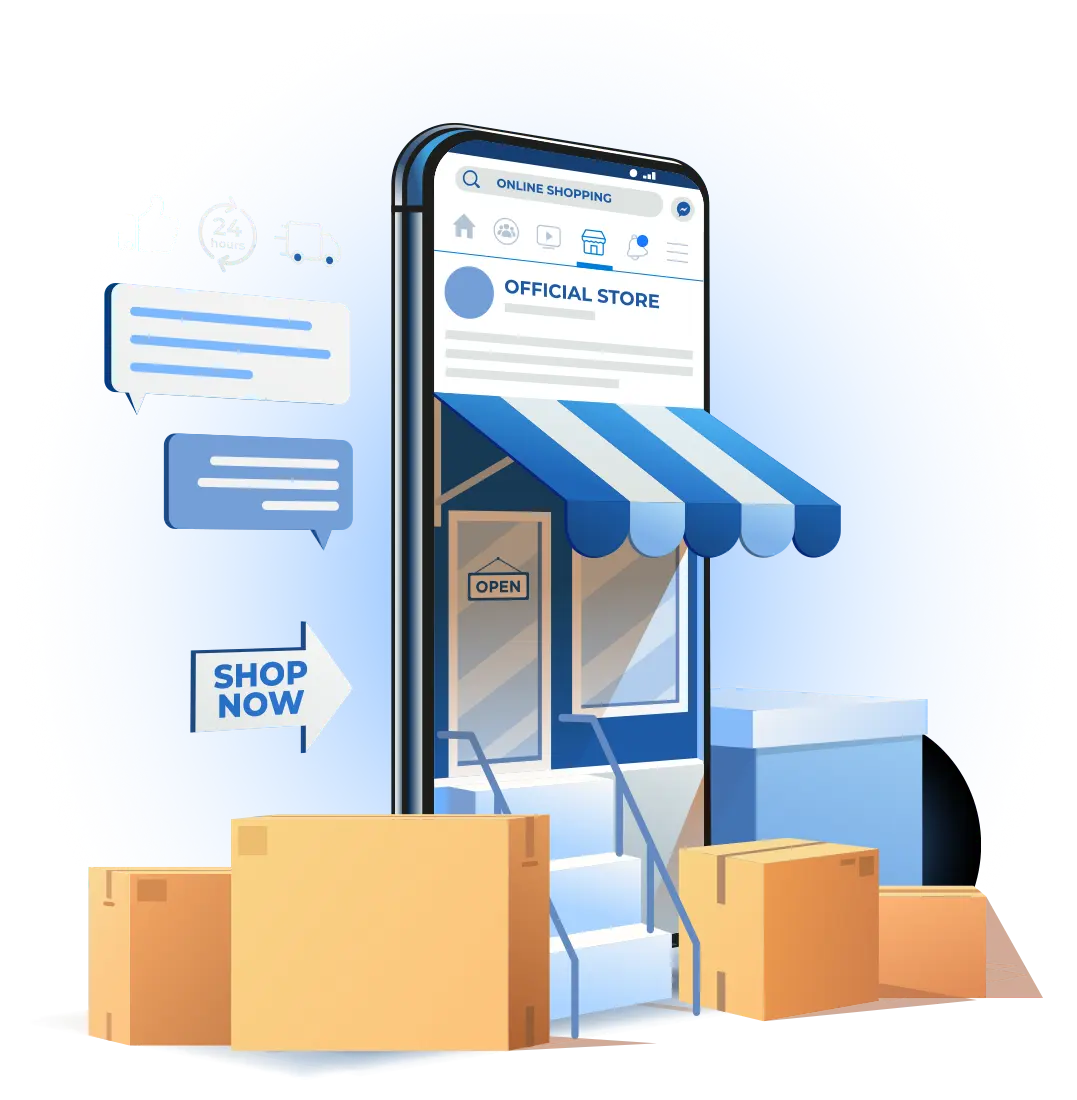
eCommerce for manufacturers means selling to distributors, dealers, or end customers through an online storefront instead of relying only on phone, email, and field sales reps. That can be a direct-to-consumer (D2C) site, a portal for existing distributor and dealer accounts, or both running side by side.
The differences from retail start with the product. A manufacturer’s catalog carries a lot of technical detail: specifications, compliance documentation, CAD files, installation guides, and compatibility information a buyer needs before committing. Pricing is rarely uniform. Contract pricing, volume tiers, and account-specific terms are standard. Many manufacturers also have a channel to protect, so a direct site has to work alongside the distributor and dealer network that has represented the brand for years.
Technical products, complex pricing, and channel sensitivity together explain why a platform built for consumer retail rarely fits a manufacturer without significant rework.
Five Core Benefits of Selling Online as a Manufacturer
1. Reach New Markets and Increase Sales
A well-built site puts your products in front of buyers who would never have found you through a distributor’s limited assortment or a regional rep’s territory. With accurate, complete product content behind it, your own site becomes one more route to buyers, working alongside the distributor and dealer relationships you already have.
2. Improve Operational Efficiency
Manual order entry, phone-based quoting, and email-driven customer service take up hours a self-service storefront can handle. When routine orders and inventory checks run on their own, your team can spend its time on the accounts and issues that need a person, instead of answering the same order-status question dozens of times a week.
3. Gain Direct Access to Customer Data
When you sell only through distributors, someone else owns the relationship with the end buyer and the data about what they search for, compare, and buy. A direct channel gives you that visibility: what buyers look for, where they hesitate, and which products sell together. Your distributor network was never going to hand you that information.
4. Meet Rising B2B Buyer Expectations
B2B buyers compare every supplier’s site against the best experiences they’ve had anywhere. McKinsey’s 2024 B2B Pulse survey found that B2B customers use an average of 10 interaction channels in their buying journey, up from five in 2016, and more than half say they’re likely to turn to another supplier if the experience across those channels isn’t smooth (McKinsey). Accurate specifications, clear pricing, and an easy way to reorder are now the baseline for staying on a buyer’s shortlist.
5. Reduce Dependence on a Single Channel
Distribution and buying patterns keep shifting, and a manufacturer that depends entirely on someone else’s channel absorbs every change in that relationship. Your own online capability, even alongside a strong distributor network, gives you a direct line to your market that doesn’t depend on another company’s strategy.
Choosing Your Model: B2B, D2C, or Hybrid
Most manufacturers don’t have to pick just one model, but knowing what each asks of your business helps you plan.

| B2B (Distributor/Dealer Portal) | D2C (Direct-to-Consumer) | Hybrid | |
|---|---|---|---|
| Who buys | Existing distributor and dealer accounts | End consumers or end-use businesses | Both, through separate experiences |
| Pricing | Contract and account-specific pricing | List or promotional pricing | Both models, kept separate |
| Channel risk | Low; reinforces existing relationships | Requires careful channel management | Highest planning effort, but you manage the risk directly |
| Content needs | Deep technical specifications and account tools | Buyer-friendly descriptions and imagery | Both, tailored to each audience |
| Best fit | Manufacturers strengthening distributor relationships | Manufacturers with strong brand recognition and consumer demand | Manufacturers ready to serve both channels without conflict |
The hybrid model is increasingly common. A distributor-facing portal paired with a limited direct presence lets a manufacturer capture new demand while keeping the network that built the business. It does take more planning upfront: clear rules for what’s sold where, and product content written for two audiences.
Eight Must-Have Features for a Manufacturing eCommerce Platform
1. One Source of Truth for Product Content
Every other feature on this list depends on the product data behind it. A product information management (PIM) system gives you one place to manage specifications, images, documents, and attributes, then publish them to your own site and to the distributors who sell your products. With CX1 PIM, the same accurate content reaches your storefront and your channel partners, so a spec change doesn’t have to be made in five places. If getting content to distributors is already a pain point, our post on product content syndication challenges for manufacturers goes deeper.

2. Reliable ERP and CRM Integration
Your eCommerce platform needs a two-way connection to your enterprise resource planning (ERP) system so inventory, pricing, and order data stay accurate without anyone re-keying it. CX1 Connect is built for this, linking commerce to your ERP, your customer relationship management (CRM) system, and the other systems you rely on, so your team isn’t maintaining custom connections.
3. Support for Complex Pricing and Catalogs
Most manufacturers can’t run on one price list. Look for native support for contract pricing, volume tiers, and account-specific terms, plus a catalog structure that handles deep technical categories.
4. Connection to Your Configure, Price, Quote (CPQ) Process
Many manufactured products are configured to a buyer’s specifications and quoted before anyone places an order. Your platform may not need to build that configuration logic itself, but it should connect cleanly to the quoting or CPQ system you already use. Buyers can then move from configuration to quote to order without your team entering the same details twice.
5. Bulk and Repeat Ordering
Manufacturing buyers reorder the same parts and materials, often in volume. Quick-order tools, saved order templates, and one-click reorder from order history take the friction out of the transactions that make up most of your volume. These tools often decide whether a buyer uses your site or keeps phoning orders in.
6. Real-Time Inventory
When availability on your site is hours or days out of date, buyers stop trusting it and go back to calling to confirm. Real-time inventory, synced from your ERP or warehouse system, keeps the numbers on your site in line with what’s on the shelf, which keeps buyers in the self-service channel you built for them.
7. Scalable, Secure Infrastructure
Your catalog and order volume will grow, and the platform should grow with them without a re-platforming project every few years. Look for security and compliance handled at the platform level so your team isn’t carrying it alone.
8. A Mobile-Friendly Experience
Plenty of B2B research and purchasing now happens on a phone or tablet, often from a job site or warehouse floor. If your site is hard to use on mobile, buyers who would have ordered on the spot will wait, call, or go elsewhere.
A Five-Step Roadmap to Launch

- Audit your product content. Take stock of the specifications, images, documentation, and pricing rules you have today. For most manufacturers, getting this data complete and consistent takes longer than choosing and setting up the platform.
- Choose your model. Decide whether you’re building a distributor portal, a direct-to-consumer site, or both. If both, set clear rules for how they coexist.
- Select a platform built for your complexity. Evaluate platforms against the features above, weighting the ones tied to your pricing model and channel structure.
- Plan integrations early. ERP, CRM, and inventory connections determine whether your site shows accurate information on day one. Scope them before you commit to a launch date.
- Launch, measure, and expand. Start with your core catalog and highest-volume accounts, then add categories and capabilities as you learn what’s working. A phased launch gets you live sooner and gives you real buyer data to plan the next phase.
Frequently Asked Questions
What is the role of eCommerce in manufacturing?
eCommerce gives manufacturers a direct channel to sell, take orders, and share product information with distributor and dealer accounts or with end customers, without relying entirely on phone and email or on a channel partner’s storefront.
What are the four types of eCommerce?
The four commonly recognized models are B2B (business-to-business), B2C (business-to-consumer), C2B (consumer-to-business), and C2C (consumer-to-consumer). Manufacturers most often operate in B2B, selling to distributors and dealers, and increasingly in B2C or D2C when they also sell directly to end consumers.
What is the difference between B2B and D2C eCommerce for a manufacturer?
B2B eCommerce serves existing distributor and dealer accounts with contract pricing and account-specific terms. D2C sells directly to end consumers or end-use businesses, usually at list or promotional pricing, and takes more planning to coexist with your existing channel.
What features are essential in an eCommerce platform for manufacturers?
At minimum: a single source of truth for product content, strong ERP and CRM integration, support for complex and account-specific pricing, real-time inventory, bulk and repeat ordering, and infrastructure that scales with your catalog and order volume. The eight features above make a good starting checklist.
How do you implement an eCommerce strategy in a manufacturing business?
Start with your product content, since incomplete or inconsistent data is the most common reason manufacturing eCommerce projects stall. Then choose your model, select a platform that fits your pricing and channel complexity, plan integrations early, and launch in phases.
Find the Right Commerce Platform for Your Business
Every section of this guide points to the same requirement: a commerce platform that handles technical catalogs, account-specific pricing, ERP connections, and a distributor network that still matters to your business.
CX1 Sigma is Unilog’s next-generation B2B commerce platform for manufacturers, distributors, and specialty retailers. It brings commerce, product content, and AI-powered agents together in one platform, so you can launch dealer portals and direct storefronts, keep catalog content accurate, and run order workflows with less manual effort.
Because CX1 Sigma runs on the CX1 Platform, your storefront, product content, and ERP work from the same data. Talk with a Unilog expert to see how CX1 Sigma fits your business.