
A practical guide for distributors and wholesalers
Launching a B2B eCommerce site is a milestone. Proving it is improving the business is the real work.
Most distributors can access plenty of digital data (traffic, page views, sessions). The challenge is that those numbers rarely answer the questions leadership actually cares about:
- Are we growing revenue, or just shifting it between channels?
- Are customers buying faster and more confidently?
- Are we reducing cost to serve, or adding complexity?
This guide focuses on the metrics that connect your digital channel to those outcomes. For each one, you will see what it tells you and which platform capabilities typically influence it.
Increased sales: Metrics that show revenue impact
1. Digital Revenue (Percent of total revenue)
What it tells you:
How much of your business is flowing through your digital channel over time.
Why it matters:It is the clearest directional signal that customers are adopting online purchasing, not just browsing.
How to use it:
Trend it monthly and segment it by customer tier (key accounts vs. long tail), product category, and order type (stock vs. project).
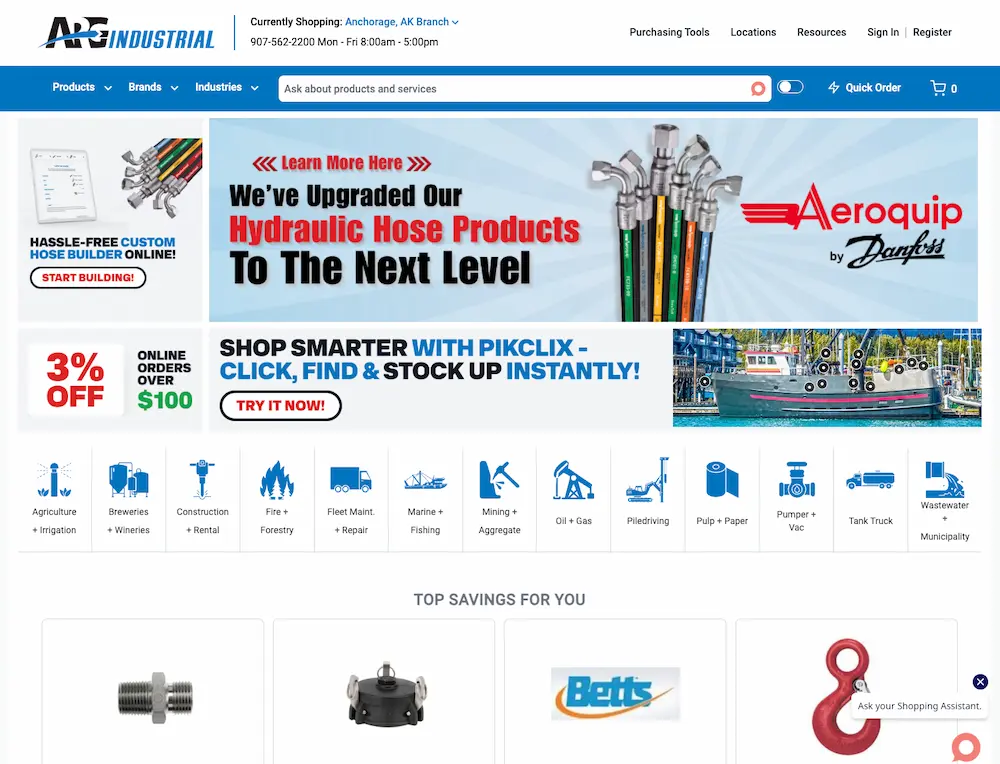
ARG Industrial is a 100% employee-owned industrial distributor founded in 1980. As they put it, “Our B2B eCommerce platform has allowed us to punch way above our weight. We’re able to compete with the large players in our industry, including some of the integrated supply companies and national companies.” Their digital revenue is growing because their site is doing more than supporting sales. It is helping drive them.
Capabilities that typically move it:
- Punchout catalogs that connect to customer procurement systems
- Quick order and bulk upload tools
- SEO-ready product pages that attract net new buyers
2. Average Order Value (Digital vs. non-digital)
What it tells you:
Whether the online experience encourages larger, more complete orders.
Why it matters:
AOV is often where digital pays off first, especially when the experience makes add-ons and replenishment easy.
How to use it:
Compare digital vs. inside sales vs. counter orders, and segment by customer type and category.
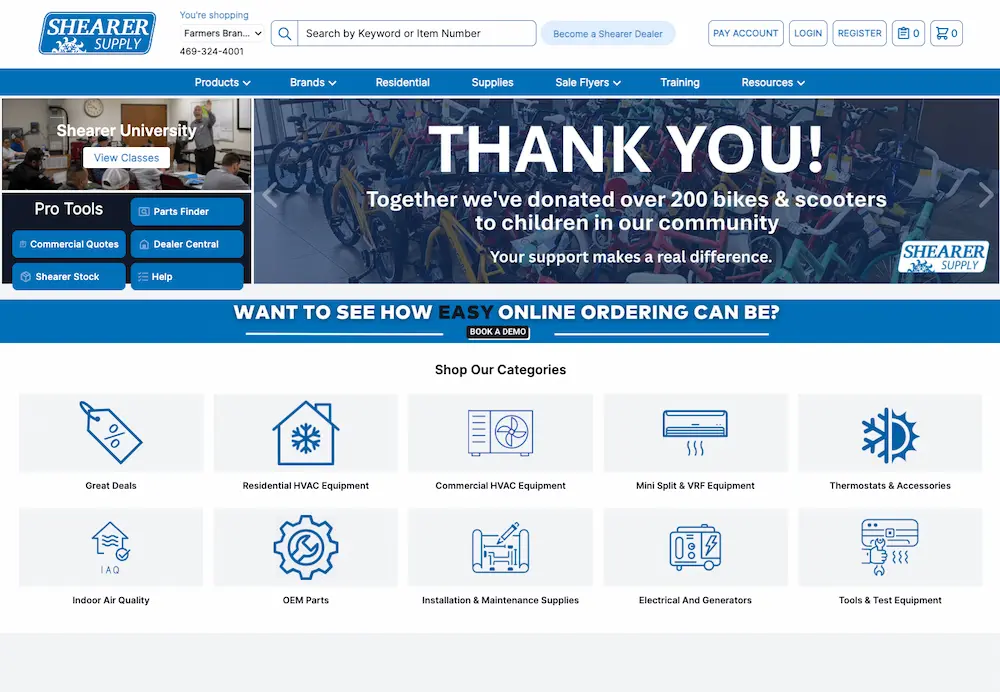
Shearer Supply is a family-owned HVAC distributor founded in 1983. They found digital orders tended to be larger: “Our online AOV is double that of our offline AOV.”
Capabilities that typically move it:
- “Frequently bought together” recommendations
- Accessories, kits, and bundles
- Promotions that are easy to find and apply
3. Quote-to-Order Conversion Rate
What it tells you:
How efficiently quote activity becomes booked revenue.
Why it matters:
Quotes are a strong intent signal. If they stall, the issue is usually workflow, follow-up, or friction between systems.
How to use it:
Track conversion by customer segment and quote type (simple vs. project-based). Also track time-to-convert.
Capabilities that typically move it:
- RFQ tools that capture the right details up front
- Quote-to-cart workflows that reduce re-entry
- Proposal-style quoting for complex orders
Customer experience: Metrics that predict loyalty and share of wallet
4. Net Revenue Retention
What it tells you:
Whether existing customers are spending more with you year over year (after churn).
Why it matters:
Retention is often the fastest path to profitable growth, and digital experience is a major driver of ease of doing business.
How to use it:
Pair NRR with adoption metrics so you can separate “customers grew” from “digital helped customers buy more.”
B&P Lamp Supply is a wholesale distributor of lamp parts and lighting hardware. Upgrading their eCommerce experience had a clear purpose: “We wanted to do an overall upgrade of our site but also needed more shopping options for a more positive customer experience. Unilog helped us deliver just that.”

- Real-time pricing and inventory visibility
- Customer-specific catalogs and landing pages
- Self-service tools like invoice payments and order history
5. Digital Adoption Rate by Key Accounts
What it tells you:
Whether your most important customers are using the site as part of their purchasing routine.
Why it matters:
Key-account adoption changes the economics of cost to serve and creates stickier relationships.
How to use it:
Define “adoption” clearly (for example, percent of orders placed online, percent of buyers active, or percent of revenue via digital) and track it per account.
ARG Industrial emphasized the enablement side: “You can build the best site in the world, but if it’s a best-kept secret, the value is not there. So we continue to focus on registering customers and educating them about our eCommerce site.”
Shearer Supply shared how their approach helped turn skepticism into habit: “Once we showed dealers how the site worked, the tools it offered, and the benefits it provided, they slowly started adopting it into their day-to-day work.”
Capabilities that typically move it:
- Role-based controls for multi-user accounts
- Customer-specific part numbers and purchasing rules
- Online account management (invoices, transactions, approvals)
6. Digital Satisfaction Score (NPS or CSAT for the online experience)
What it tells you:
How customers feel specifically about online ordering, search, and self-service.
Why it matters:
It helps you isolate “site experience” from overall relationship sentiment.
How to use it:
Collect feedback at key moments (post-order, post-support interaction) and connect it to behavior (repeat rate, adoption).
Capabilities that typically move it:
- Strong search with filters and auto-suggest
- Mobile-friendly design for on-the-go ordering
- Clear shipping, delivery, and tracking visibility
Operational efficiency: Metrics that show cost-to-serve improvement
7. Cost to Serve (Per order or per customer)
What it tells you:
Whether the business is doing less manual work to deliver the same or better service.
Why it matters:
For many distributors, cost to serve is where eCommerce ROI becomes undeniable.
How to use it:
Start simple. Track volume of low-value touches (order status calls, invoice requests, re-keyed orders), then tie reductions to digital usage.
Shearer Supply highlighted how centralized product data helps lower service costs: “Because all the product information is stored there, it provides one source of truth and a connected ecosystem for both our internal teams and our customers.”
Capabilities that typically move it:
- Self-service access to invoices and order history
- Automated order confirmations and notifications
- Reorder and replenishment tools
8. Order Accuracy Rate
What it tells you:
Whether customers and teams are placing the right orders the first time.
Why it matters:
Fewer errors means fewer returns, credits, expedites, and service escalations.
How to use it:
Track error types (wrong item, wrong spec, wrong ship-to) and map each type to a fix (content, UX, workflow).
Capabilities that typically move it:
- Enriched product content and specs
- Guided selling or rep-assisted carts
- Easy reordering from purchase history
9. Revenue per Sales Rep (or Sales Productivity)
What it tells you:
Whether digital is helping reps spend time on higher-value work.
Why it matters:
The best B2B eCommerce experiences do not replace sales teams. They remove repetitive tasks so reps can sell more strategically.
How to use it:
Pair this with “assisted vs. self-serve order mix” to show how digital is changing rep workload and output.
Capabilities that typically move it:
- AI-driven insights and next-best actions
- Saved lists and reorder suggestions
- Product comparison and configuration tools
Final thought: Do not just track, act
Metrics only matter if they lead to decisions. Whether you are trying to grow digital revenue, reduce cost per order, or increase customer loyalty, your eCommerce platform needs to deliver across all three.
As ARG Industrial put it, “All the technology that we’re investing in and building is built to serve people, not the other way around.” Data and tools only matter when they help real people buy, sell, and grow.
At Unilog, we build connected product content and commerce solutions purpose-built for distributors and wholesalers. If you want help defining your KPI framework, instrumenting measurement, or identifying which capabilities will move the metrics above, we can help.